
Menu

eCategory Management (eCatMan) is quickly becoming one of the most influential capabilities in digital commerce. As shopper behavior shifts and the line between online and in-store blurs, brands are redefining how they use insights, content and retailer collaboration to drive loyalty.
That evolution was the focus of our recent feature in the Firstmovr Omni CatMan webinar, where Luke Higgins (Profitero+) and Margo Lence (Scotts Miracle-Gro) explored how leading organizations are modernizing category management to create seamless, confidence-building shopper experiences. Their conversation highlighted the behaviors, tools and partnership models that are helping brands turn one-time buyers into lifelong fans.
If you missed the live discussion, you can watch the on-demand webinar here or get the breakdown below.
✅ Brands are evolving fast — and eCatMan is helping them connect the dots between in-store and online.
✅ Success comes from designing for integration, nurturing partnerships and activating with intelligence.
✅ When brands and retailers align around shared goals, shopper confidence and loyalty naturally follow.
If you’ve ever heard the term eCategory Management (or eCatMan) and wondered what it really means, here’s the short version: it’s the modern evolution of category management, built for an omnichannel world — where the shopper journey spans product pages, search results, shelves, reviews and store aisles.
As those journeys expand and expectations rise, the capability guiding them has to evolve too. As Luke Higgins put it during our recent webinar: “Where we’re going, you do need eCatMan.”
Traditional CatMan was built for brick-and-mortar. But today’s shoppers move fluidly between online and in-store. To win, brands need to connect eCommerce, sales, media and insights teams around a single goal: helping shoppers find, choose and love their products everywhere.
We think of eCatMan through our DNA framework:
Brands that bring these elements together aren’t just keeping up — they’re leading. Profitero+ data shows they’re 1.5x more likely to have unified category management across e-commerce and in-store.
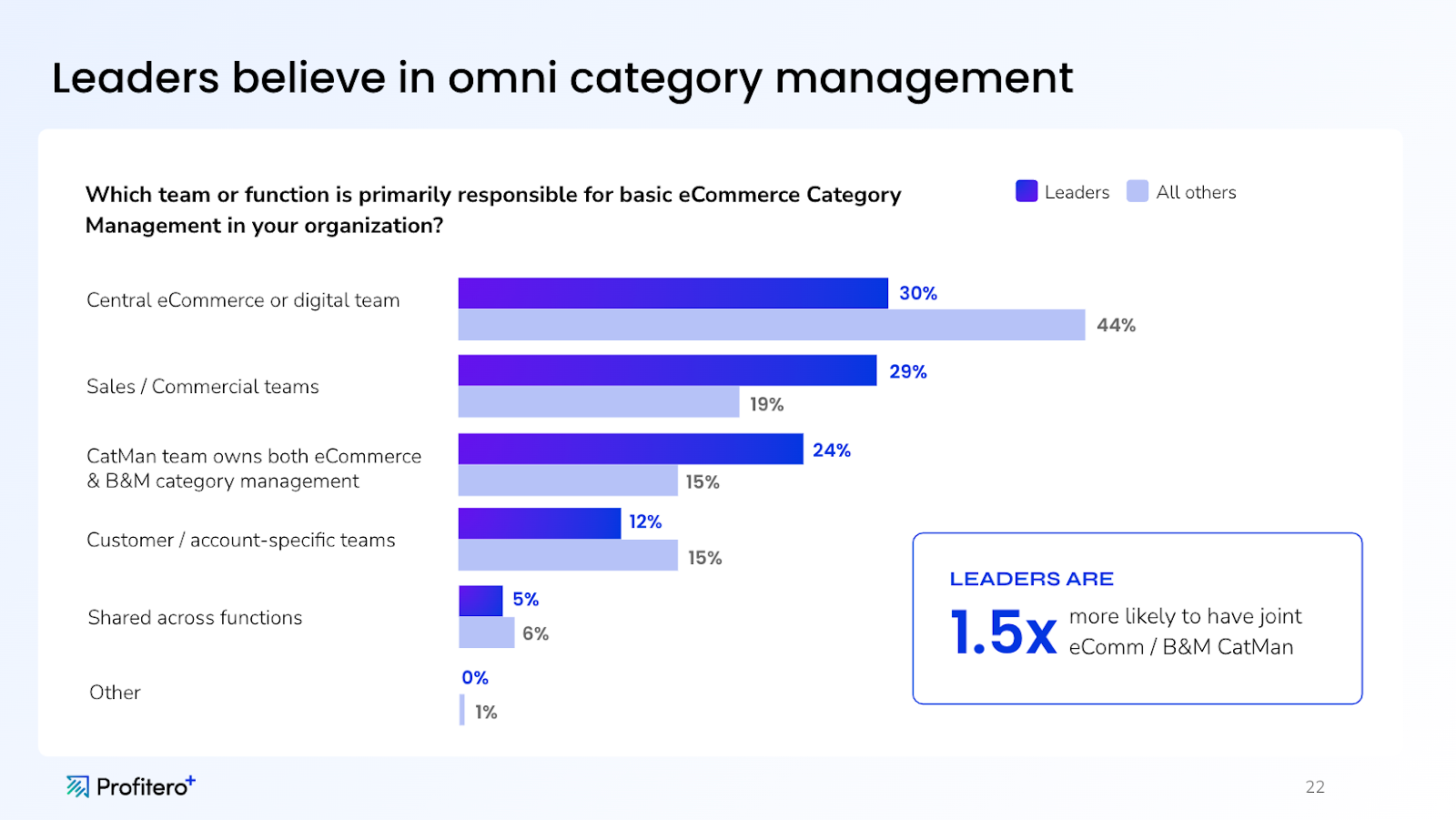
Every brand is on a journey — and that’s why we built the eCatMan maturity framework. It’s a simple way to see where you are and what to work on next:
Crawl: Learning the basics of eCommerce and data
Walk: Building tools and tracking KPIs
Run: Using insights to shape retail decisions
Sprint: Fully integrated, data-driven leadership
At Scotts Miracle-Gro, Margo Lence has seen that evolution firsthand.
“We’ve built tools and scorecards to show how the digital shelf affects the total omni experience,” Margo shared. “Now we’re focused on what really moves the needle for both us and our retail partners.”
Brands accelerating maturity focus on:
As the visual below illustrates, digital store walks uncover gaps in taxonomy, navigation and content that directly impact conversion.
It’s all about creating a continuous learning loop — and that curiosity is what helps teams move from walk to run.
.png)
The best brands don’t stop at internal alignment— they use eCatMan to co-create growth with retailers.
According to our 2025 eComm Organizational Benchmark report, leaders are twice as likely to include eCommerce goals and budgets directly in their JBPs. That shift is huge. It means digital isn’t a side project — it’s embedded in the business plan.
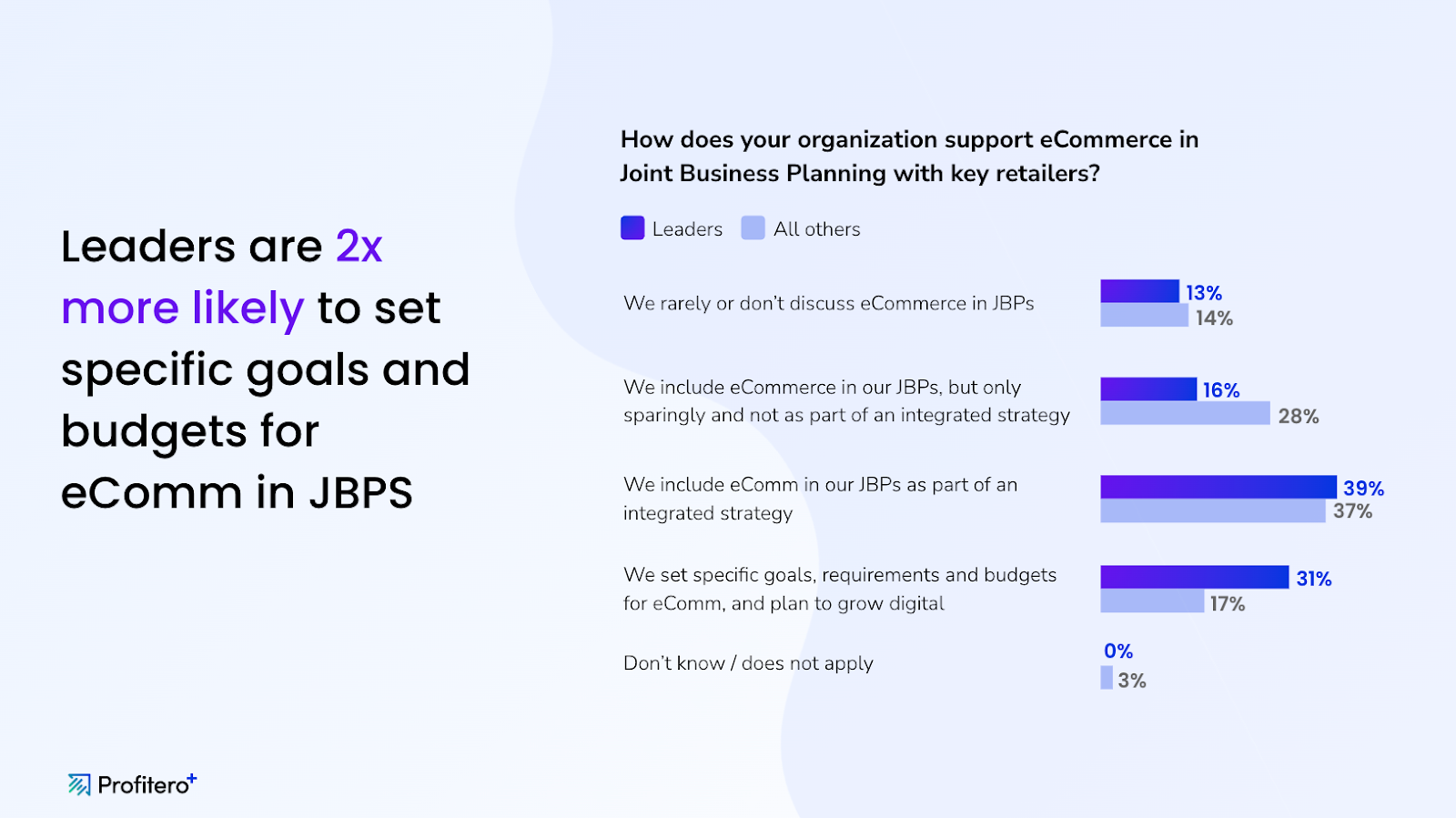
Margo shared how this plays out at Scotts Miracle-Gro: “Our JBPs are fully omnichannel. We align goals and KPIs across both brick-and-mortar and e-commerce. That strengthens relationships and drives growth together.”
What sets eCatMan leaders apart:
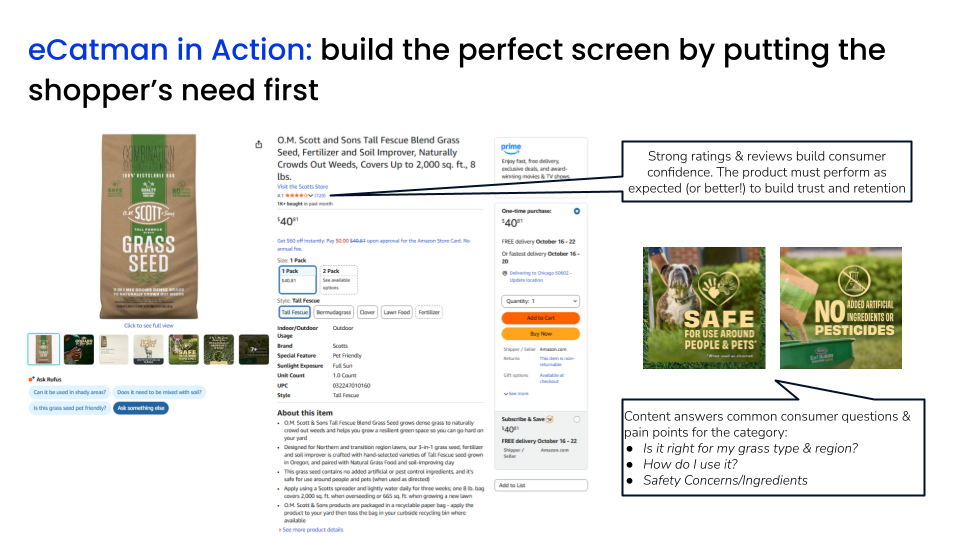
A “perfect screen” means a confident shopper. That comes from great pricing, strong imagery, authentic reviews and content that inspires trust — and repeat purchases.
As shown in the example below, the perfect screen guides the shopper through ratings, reviews, usage guidance, safety information and more.
Brands often ask where eCatMan should sit and how roles should be structured. The answer, as Margo from Scotts Miracle-Gro emphasized, is to think omnichannel – not organizationally siloed:
“Even though my title is eCatMan, it’s really omnichannel CatMan. We manage across all retailers and channels.”
This approach helps teams spot cross-retailer opportunities, streamline decision-making and ensure the digital and physical shelves work in tandem.
The biggest pitfall? Treating eCommerce as separate from in-store strategy. The shopper doesn’t distinguish channels – and neither teams.
When teams organize around the shopper and activate consistently across channels, eCatMan becomes a true loyalty engine.
In the Firstmovr Omni CatMan webinar, Luke and Margo referenced the crawl, walk, run maturity framework for eCategory Management. Watch the on-demand webinar and access the eCatMan maturity framework here. Plus, you can explore further insights in the 2025 eComm Organizational Study, which is packed with data, examples and tools to help you elevate your eCatMan capabilities and build stronger, more loyal shopper relationships.





.png)
