Menu

“Alexa, what’s the best coffee machine for someone who likes strong coffee?”
Five brands makes the shortlist. Yours isn’t one of them.
Who is responsible and, more importantly, who has the authority to fix it?
AI-assisted discovery is becoming a meaningful part of the shopper journey. According to Adobe, AI-driven traffic to retail sites during Prime day 2026, measured by shoppers clicking on a link, increased by 89% while those visits had a 40% higher conversion rate than sources such as paid search and social media.
The wider commercial signals are also becoming harder to ignore:
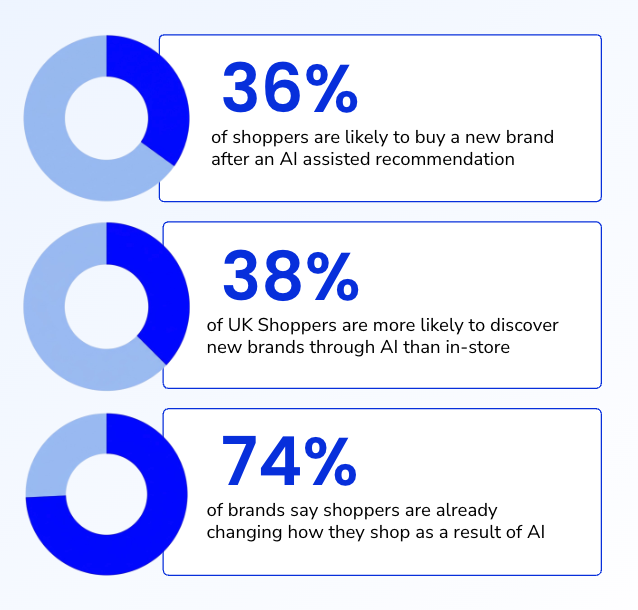
Shopper behaviour is changing faster than the structures and processes inside many CPG businesses. AI-assisted discovery cuts across eCommerce, Brand, Sales, Content, Search & IT. Each function influences whether a product is found, understood and recommended, but few organisations have made one person accountable for the outcome.
As AI changes how products are discovered, this creates two closely connected questions:
The answers depend on multiple factors, from the effectiveness of product detail pages (PDPs) to the consistency of brand information across retailer sites, review platforms, social media and other sources.
AI visibility therefore requires co-ordinated input from several teams, supported by one clearly accountable owner.
Traditional keyword search still matters in most categories. Search remains the most popular way shoppers navigate retailer websites, while AI chat assistants account for a smaller but growing share of journeys.
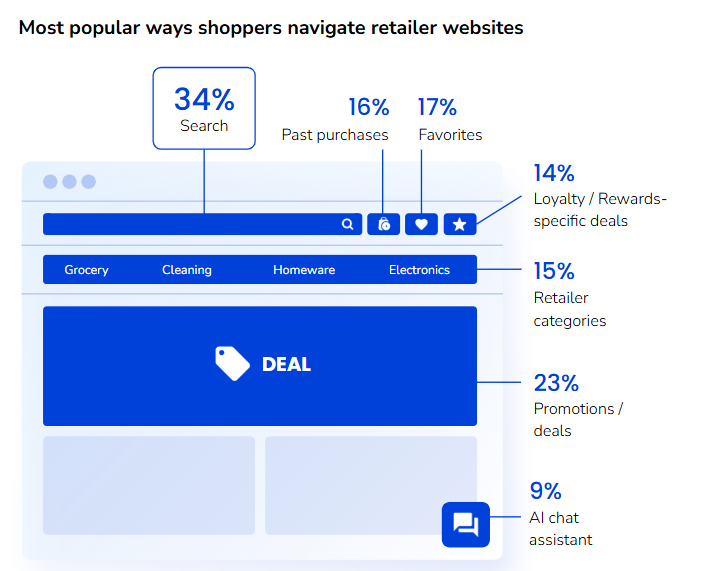
AI-assisted discovery introduces an additional layer. Shoppers can describe a need, problem or occasion rather than enter a specific brand or product term. Digital content therefore needs to do more than include the right keywords. It must help AI assistants understand the brand well enough to recommend it.
This is where the ownership gap becomes visible. Every function has a reasonable claim:
Each claim is valid and that’s precisely the problem.
When everyone owns a piece of the problem, nobody necessarily owns the outcome. Priorities can conflict, decisions slow down and brands react too late when retailer algorithms or shopper behaviour change. Even worse, sometimes they don’t react at all.
Profitero’s 2026 eComm Organisational Benchmark study defines leading brands growing ahead of their category and therefore gaining share.
These organisations over-index on three actions linked to agentic commerce:
As a result, leaders are twice as likely to say they’re positioned to win with agentic commerce.
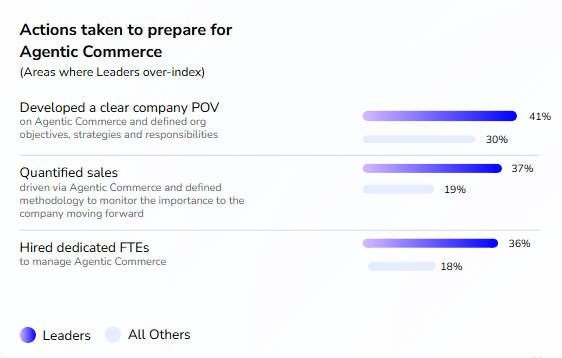
Dedicated roles can help, but the organisation must define ownership first. Without clear responsibilities across the organisation, adding people won’t solve the underlying problem.
Product titles, descriptions, images, reviews and availability all help AI assistants answer five practical questions:
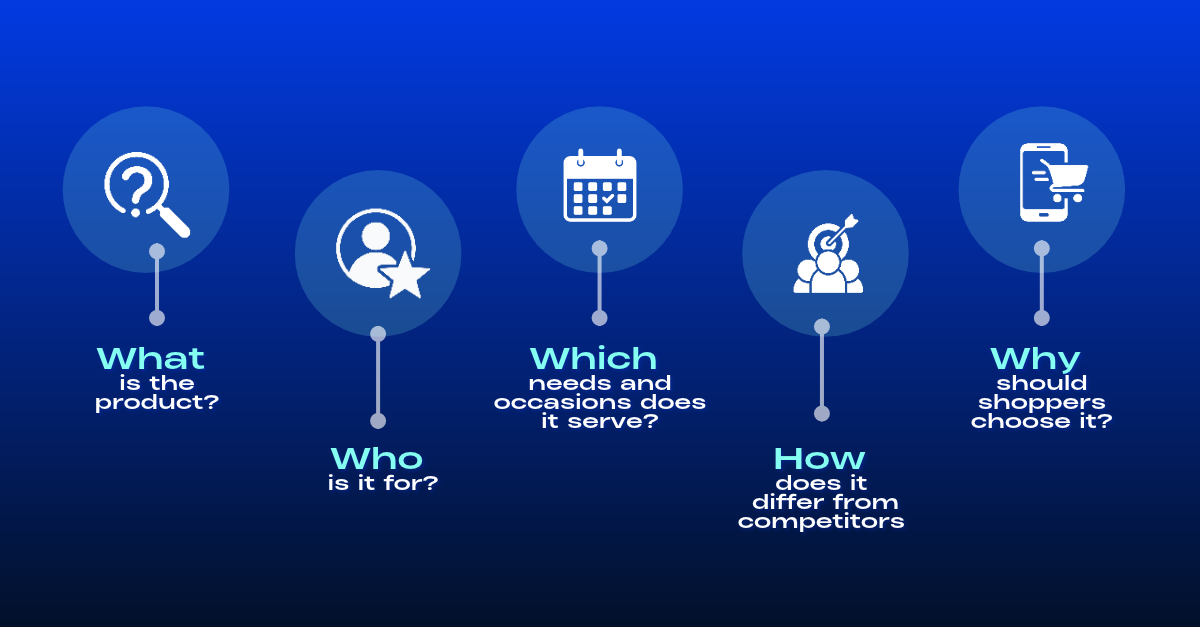
Those answers need to be expressed clearly in product content, using natural language and complete sentences.
This can create genuine tension between Brand and eCommerce teams. The information that shoppers, and therefore AI assistants, are looking for may not fit neatly with established brand positioning. Highly controlled brand language can sometimes omit practical product information, while functional eCommerce copy can lose the distinction that makes the brand valuable.
Both sides have a legitimate concern. They need an agreed method for translating the brand proposition into clear, retailer-ready product information. Without a combined approach, the brand is less likely to be recommended.
Consistency also matters. Conflicting claims across retailer PDPs, brand websites, reviews, community content and social platforms can make it harder for AI Assistant’s to determine why a product is relevant.
Stronger internal alignment helps every function understand when it must contribute, which information it controls and who makes the final decision.
There is no universal answer to where AI visibility should sit, CPG businesses have different structures, category requirements and commercial priorities.
But there is a practical method that any CPG business can follow, built around three priorities:
Several teams contribute to AI visibility:
The roles need to be explicit. Shared input should not become shared accountability.
One named individual should be accountable for whether priority products are visible, accurately represented and recommended through AI-assisted discovery.
That person also needs decision rights. They must be able to resolve tensions between:
Use one agreed KPI, supported by practical diagnostics. Share of Agent Recommendations may be one useful measure, but the wider aim is to understand whether priority products are being surfaced accurately and consistently.
In many CPG businesses, the natural owner will be the Head of eCommerce or an equivalent digital commerce lead. This person is often closest to retailer execution, digital shelf data and the commercial consequences. Some organisations may reach a different conclusion. Brand or Marketing may be better placed in premium, highly brand-led or tightly regulated categories, with eCommerce accountable for delivery.
The choice of function matters less than the clarity of the mandate.
Above all, if you can’t name the person, the metric and the decisions they’re allowed to make then you don’t have an owner.
AI visibility is a shared effort, so each function needs to understand how its responsibilities are evolving and what questions they should be challenging themselves with.

Cyber 5, Prime Day and the wider holiday shopping season place additional pressure on product discovery, availability, pricing and conversion. High-traffic periods can expose gaps in accountability quickly because shoppers are comparing more products and have little reason to wait for a particular brand.
Three actions can help CPG teams prepare.
Brand, Sales, Content, Media, Insights and IT teams should understand why product-page quality and consistent brand information matter to AI-assisted discovery.
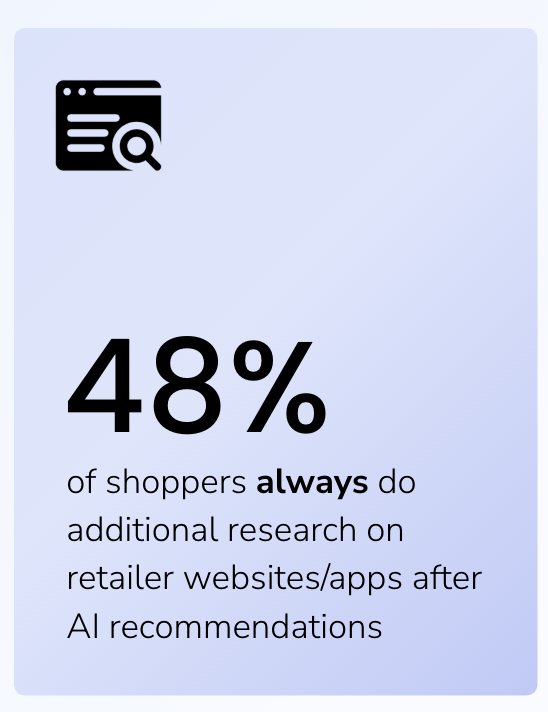
This remains commercially important after the initial recommendation. Nearly half of shoppers always conduct further research on retailer websites or apps after receiving a recommendation from an AI assistant.
Check whether AI assistants and agents can read and interpret brand-controlled content. Prioritise
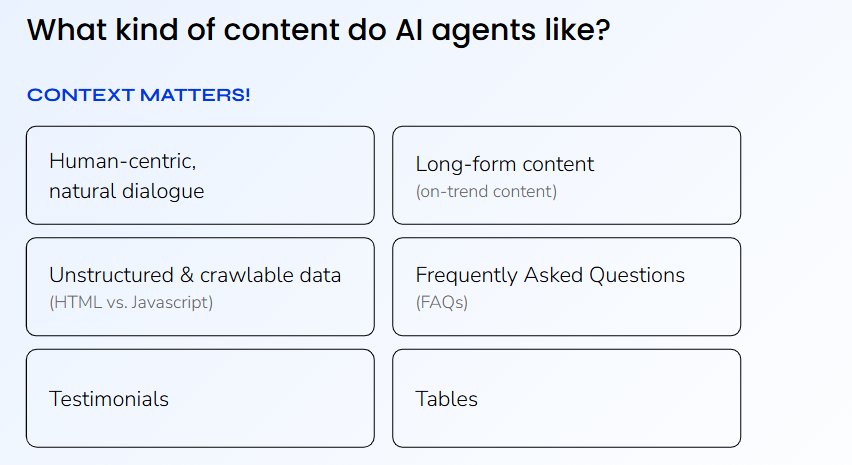
The aim is to make commercially relevant information easy for shoppers, retailer systems and AI assistants to interpret.
Select three to five products and define the shopper questions most relevant to each one. Update the product-page content to answer those questions clearly, then monitor whether the products become more visible and accurately represented in AI-assisted recommendations.
For each product, test whether the available content communicates:
For further details, see Profitero+’s report, Decoding Rufus: An analysis of the key factors influencing AI-enabled product recommendations
The challenge of achieving brand visibility isn’t new. The technology that shoppers use to discover products is. Shoppers and AI assistants still need products they can understand, trust and choose, but the journey may now begin before the shopper reaches a retailer website.
The winners of AI visibility won’t necessarily be the companies with the largest AI teams. They’ll be the ones that connect all internal functions around a common commercial outcome, with one owner empowered to act.
AI visibility should be everyone’s objective, but somebody’s responsibility.