Menu

New research from Profitero+, The 2026 Digitally Influenced Shopper, finds that AI is becoming firmly embedded in the purchase journey, fundamentally reshaping how consumers discover and compare products. At a time when many brands are still working to realize the full potential of digital, the AI-driven third evolution of commerce is already underway.
This shift comes as many CPGs continue to push back against digital investment, even while relying on digital as a major growth channel. Combined with pressure from leadership to act on AI, the need for a better understanding of shopper behavior has never been greater.
To understand this evolution in shopper behavior, Profitero+ surveyed consumers across the US, UK, Germany, France and Canada, uncovering how digital touchpoints shape purchase decisions and how consumers are integrating AI into the shopping journey.
Below, explore five key trends brands from our US report.
Trend #1: Digital influence extends far beyond where purchases ultimately happen.

Whether a consumer happens to purchase a product online or in-store, there’s a good chance their product choice has been shaped by digital touchpoints – including everything from PDP content to a brief glimpse of an ad while scrolling social media.
This means digital is not just driving eCommerce sales; it’s dictating behavior at the physical shelf. Consider that nearly half of all shoppers are researching products on a retailer’s site or app, both before leaving home and while in-store. Digital shelf excellence drives success everywhere.
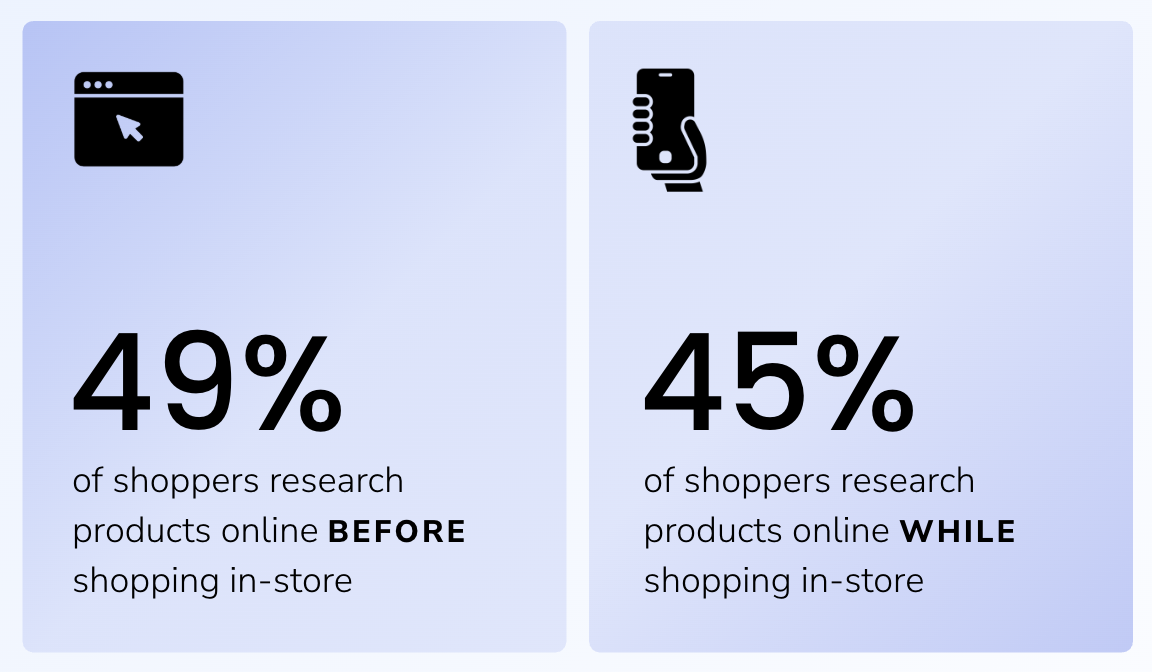
Some CPGs, especially in traditional retail categories, are challenging or even reducing digital investment, arguing that eCommerce represents only 10-15% of their total sales. This is a mistake: it ignores the critical insight that every category has a higher level of digital influence than eCommerce sales penetration.
In Food & Beverage, for example, Profitero+ found that the percentage of shoppers who self-report as digitally influenced (46%) is over 2x higher than the category’s latest reported eCommerce penetration (19%, Brick Meets Clicks, December 2025). Brands in any category that under-invest in digital excellence risk hurting sales across in-store and eCommerce channels alike.
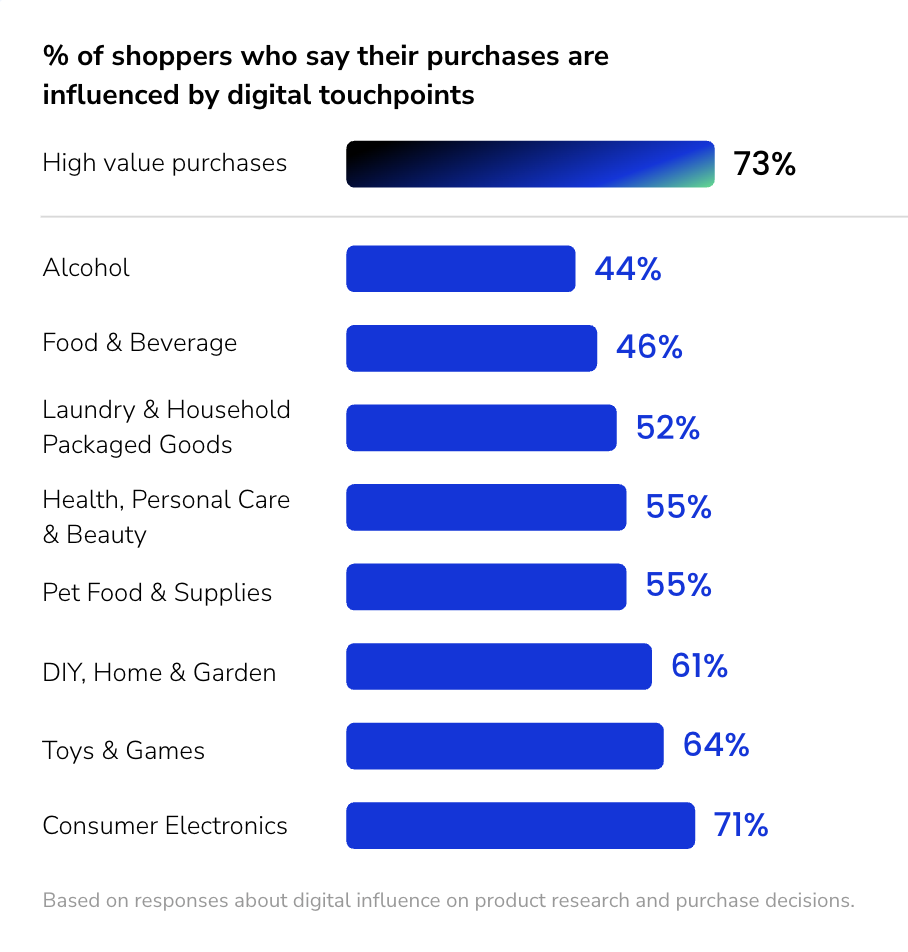
Importantly, 3 in 4 consumers are digitally influenced when making high-value purchases. Since high-value or high-consideration purchase occasions can emerge in any category, digital conversion levers become even more critical to winning sales across channels.
Trend #2: Digital touchpoints, including AI, are the primary drivers of new product discovery.
Research from Profitero+ has consistently found that the store aisle is no longer the predominant way consumers discover new products. But now, in addition to retailer websites and social media, 42% of shoppers say they’re more likely to discover new products through AI than in-store, with younger shoppers are leading the shift to new product discovery via AI.
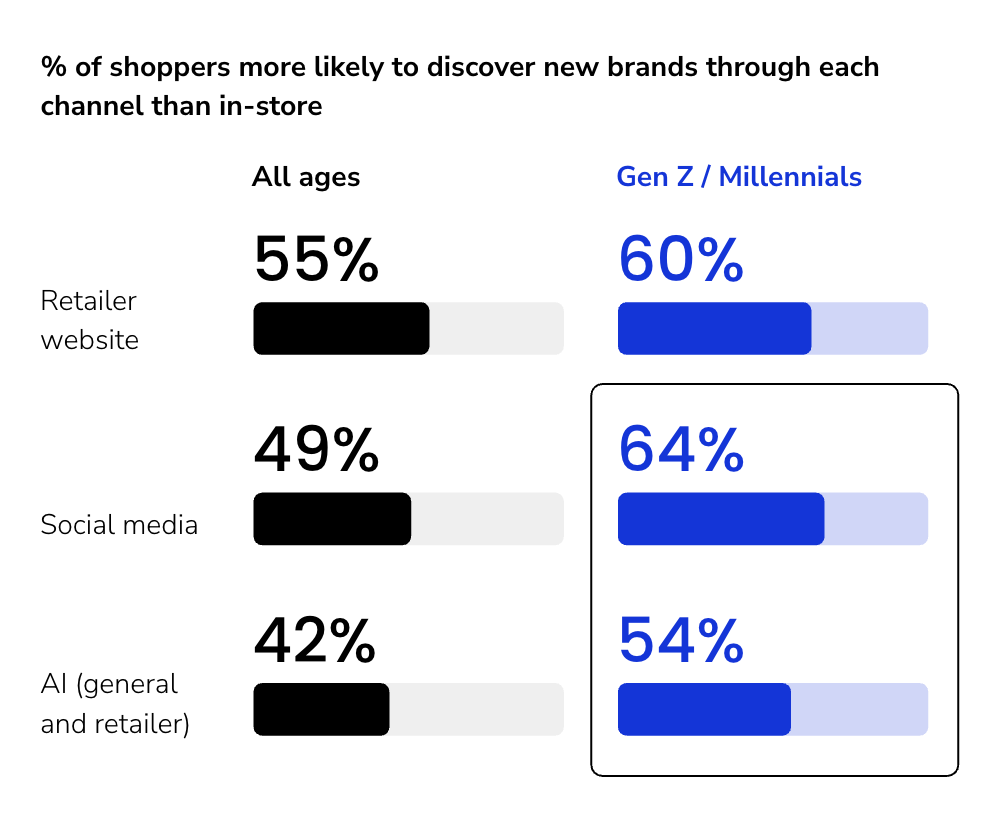
Trend #3: AI assistants will become the new store assistants, helping shoppers validate that they’re making the right decision.
Our research confirms the widespread adoption of AI tools into the consumer journey, and shoppers’ reliance on AI is likely to increase further:
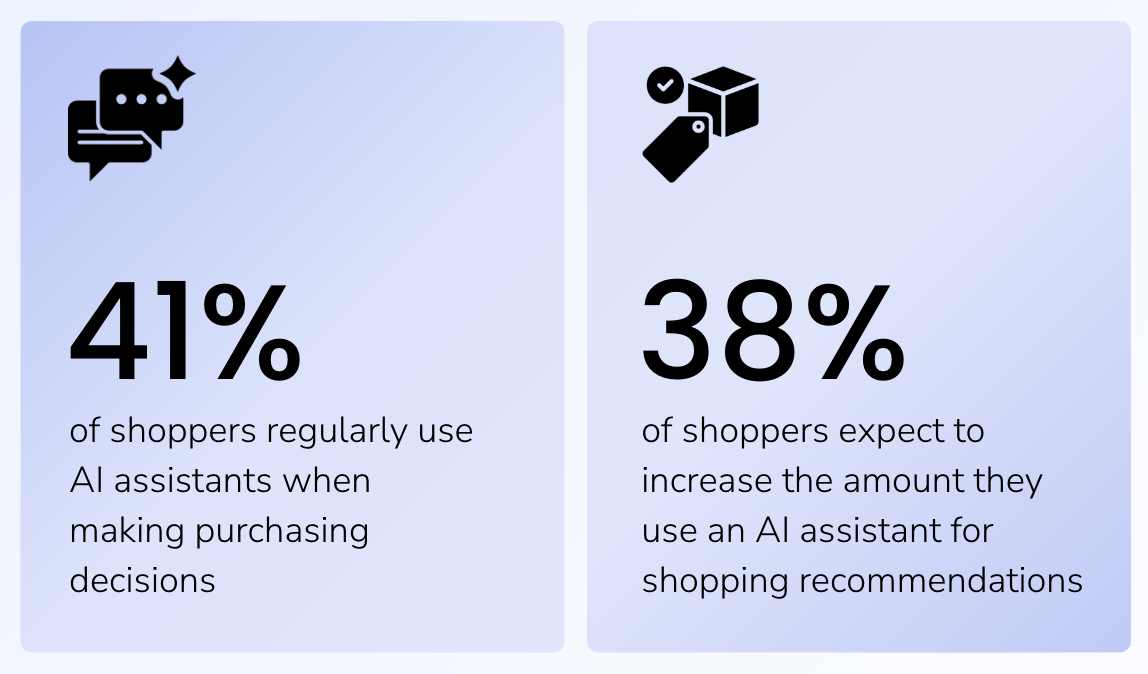
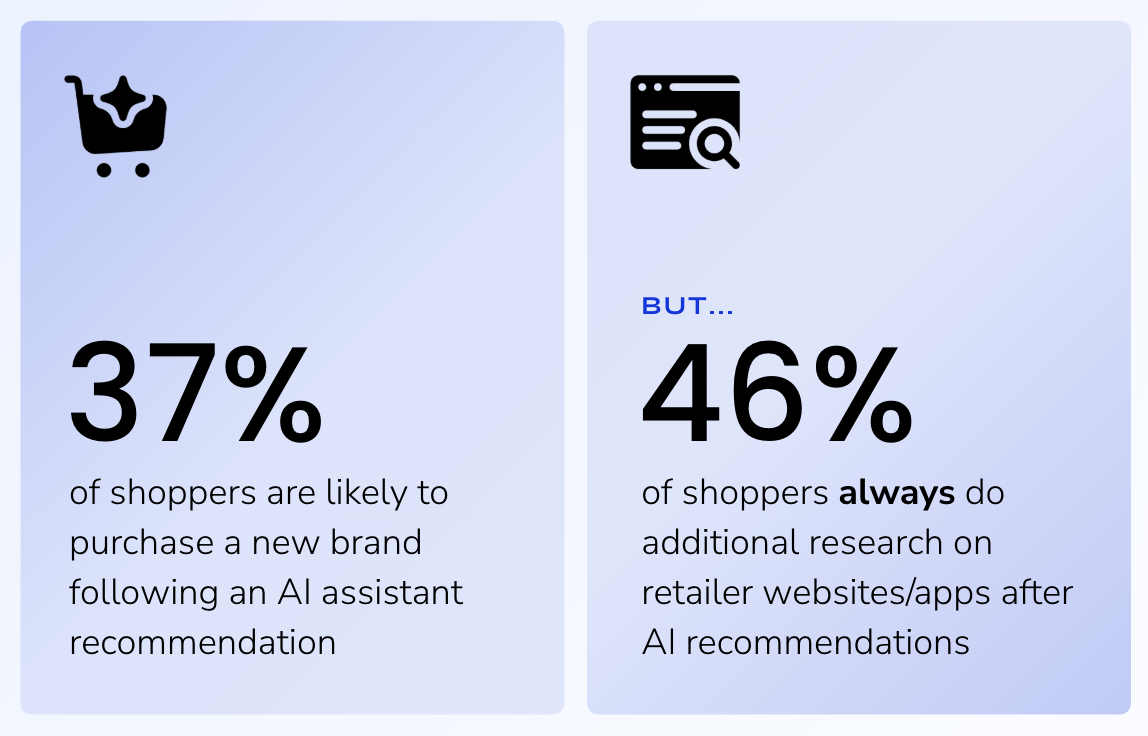
Trust in AI as a shopping assistant is particularly high among younger consumers: 52% of Gen Z and Millennial shoppers say they are likely to purchase from a new brand following an AI assistant’s recommendation.
AI is taking on the role of the knowledgeable store associate, helping shoppers discover products, compare options, and make confident decisions, whether they are looking for a highly-rated food product or validating the specs of a new console. In this third era of commerce, “digital influence” is becoming “digital assistance”.
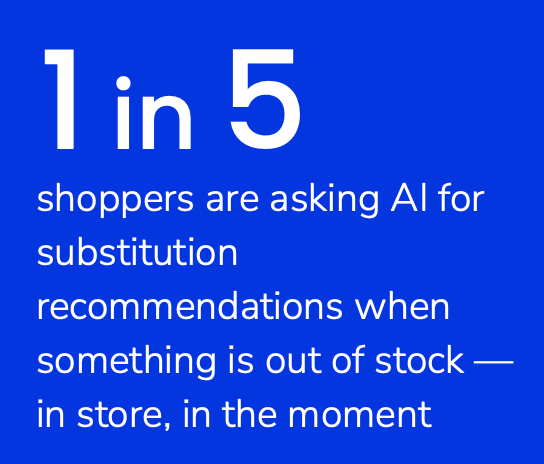
AI is also lowering the barrier to switching brands. When a product is out of stock, shoppers increasingly turn to AI to find suitable alternatives, even while standing in-store. Time savings are one of the primary reasons people are adopting AI in their everyday lives, so it's no surprise they're also using it to make shopping decisions. And it's not just for availability. AI makes product content summarizable and easy to compare, with 42% of shoppers saying they use AI to understand product details and specifications. Combined with lower brand loyalty among younger shoppers, this means discovering alternative brands has never been easier.
Trend #4: Your PDP still holds the key to convincing shoppers, especially Gen Z and Millennials.
AI assistants may be reshaping the shopper journey in terms of product discovery and comparison, but consumers are still in the driver’s seat – they choose whether, and what, to buy. That means brands are still responsible for conversion.
Even after receiving an AI recommendation, 46% of shoppers always do additional research on retailer sites and apps. Reviews, rich content and videos remain the critical sources of validation that convince shoppers to make the final purchase. PDPs are just as essential as ever in converting demand into sales.
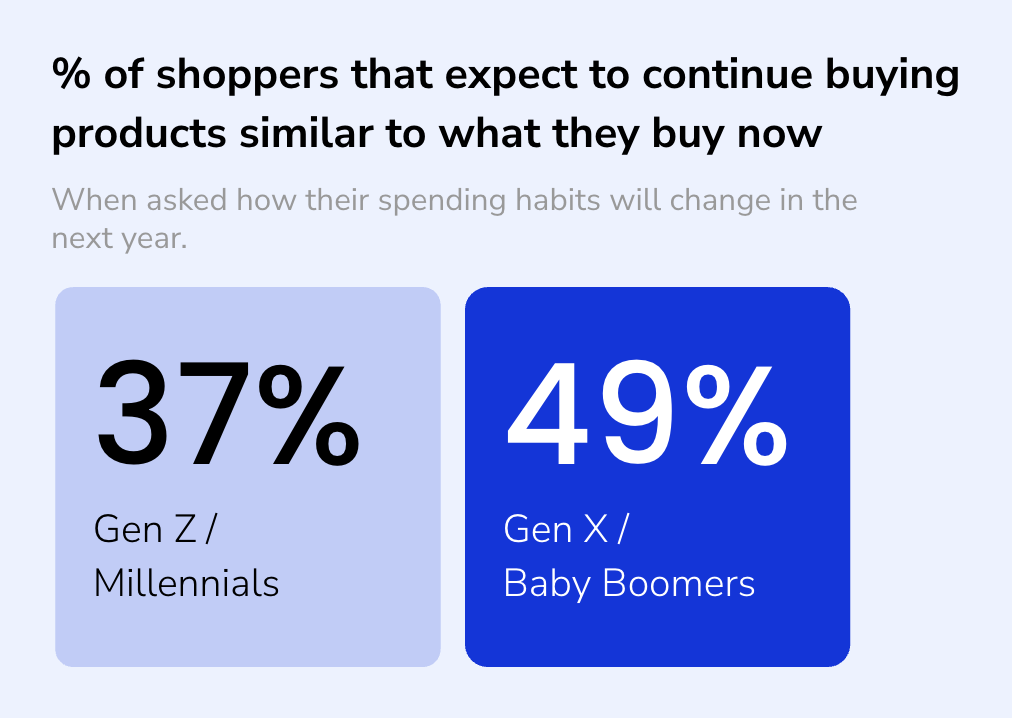
The importance of content excellence for a brand is only going to grow. Compared to Gen X and Baby Boomers, Gen Z and Millennial shoppers are less brand loyal, with eMarketer reporting that 81% have switched brands within the past year. Profitero+ research confirms this trend: younger buyers expect to switch up their purchase habits.
Our study also finds that younger buyers are also more likely to rank PDP content, star rating and reviews as their top consideration when choosing what to purchase. For brands, content remains the key to persuading the next generation of shoppers.

Trend #5: AI isn’t trusted to make autonomous purchase decisions (yet).
Shoppers may be rapidly adopting AI to discover and compare products, but they’re doing so cautiously. AI and even social media are far from being trusted, established resources, with consumers significantly more likely to turn to reviews on retailer websites.
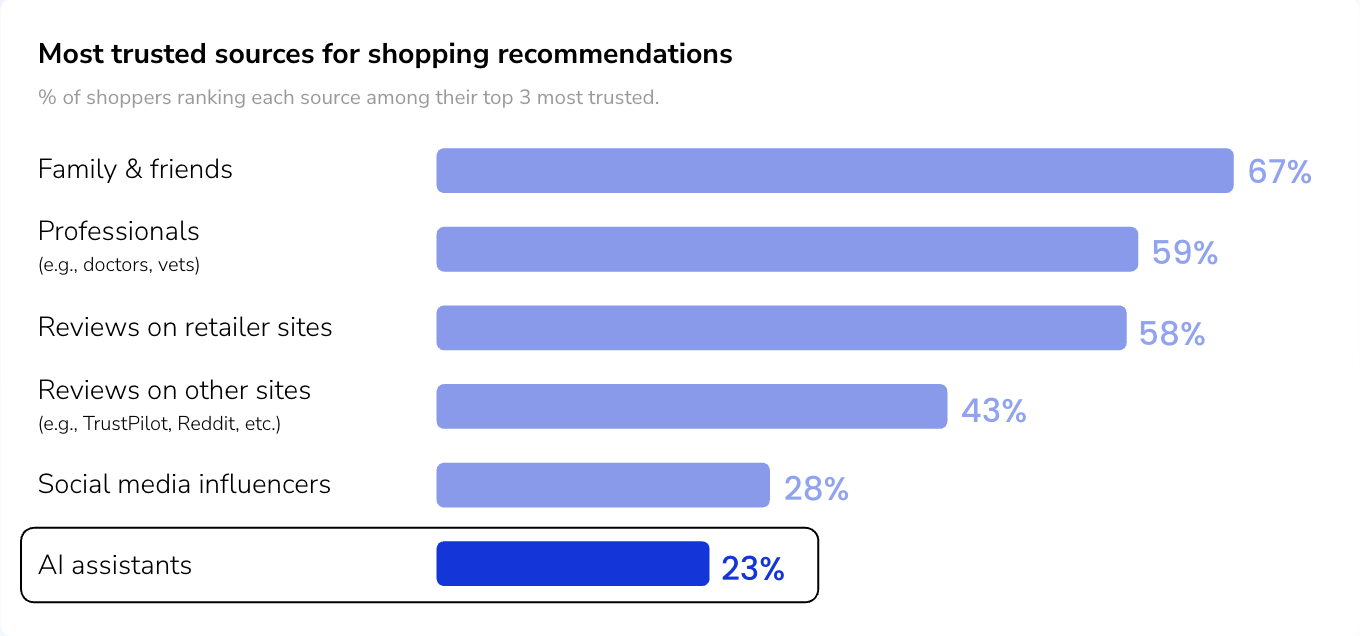
True agentic commerce is a much-anticipated future state rather than a present reality. AI plays many roles in the consumer journey today, but autonomous checkout is at the bottom of the list, with only 1 in 4 shoppers using AI to complete a purchase.
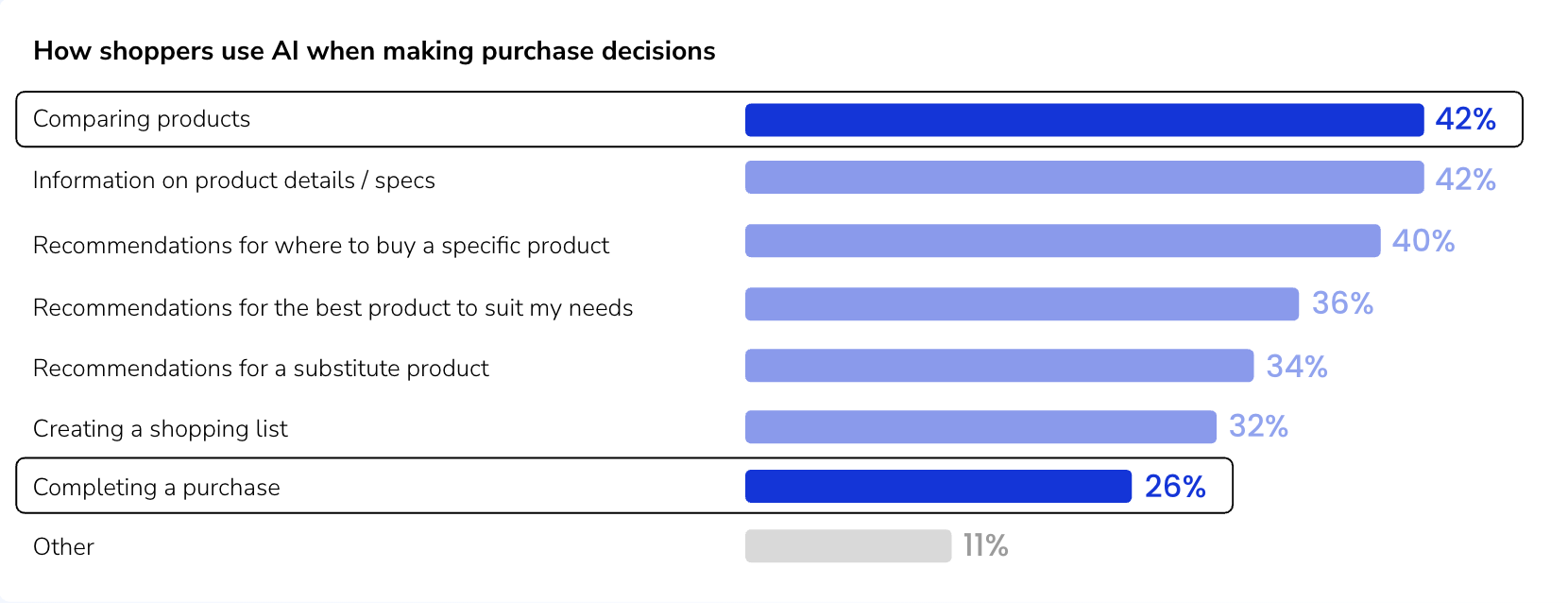
Key takeaway #1: AI is trusted for discovery, not conversion.
AI is here to stay as a major tool for product comparison and evaluation, so brands must work harder than ever to excel across the digital touchpoints where new product discovery happens – both for humans and for AI tools sourcing product information and recommendations.
While consumers don’t yet trust AI to choose and purchase products on their behalf, rapid adoption of AI tools in the consideration stage means that for brands, the lifetime value of customers starts at the digital shelf. Winning the first moment of consideration online can build habitual repeat purchases both online and offline.
Brands must therefore assess their position in these early stages of agentic recommendations. Build an understanding of the language and intent that shoppers are using in questions to discover your products - and optimise your content to ensure they become the undeniable answer to these questions.
Key takeaway #2: Optimizing for AI is “yes and”, not “either or”.
Nailing the digital shelf fundamentals is more important than ever. AI tools are profoundly influenced by traditional metrics of digital shelf success, so brands can only expect to win with shoppers adopting AI-driven discovery or consideration pathways if they are discoverable in search, appear valuable in online comparisons, and are convincing in reviews on retailer sites.
Once those digital shelf fundamentals are solid, brands can optimize for the age of AI-assisted commerce by understanding what sets AI apart from traditional digitally influenced shopping, including the specific digital touchpoints that AI indexes on to source product research and generate recommendations. Leading brands are already adapting for an agent-driven future, understanding how to drive visibility and influence across AI-assisted journeys.
Key takeaway #3: PDPs hold the key to winning the final purchase decision.
As consumers shift from digitally influenced shopping to digitally assisted shopping, high-quality PDP content and reviews in particular are more critical than ever for consumers to sense-check AI suggestions before buying a product. Similarly, even in the AI age, traditional sources of trust, such as reviews on retailer websites, remain the bedrock of conversion.
For brands, the take-home is clear: invest in high-quality and authentic reviews, rich content, comprehensive descriptions and user manuals that clarify how your products add unique value. Drive a test and learn mentality within your teams to identify and optimize the factors that drive agentic visibility.
* * *
Profitero+ Advisory can help your brand understand your connected shopper, define your data and measurement strategies, and evolve your operating model to accelerate growth. Get in touch with our team here.
What is AI-assisted commerce?
AI-assisted commerce describes the growing role of AI in helping shoppers discover, compare and evaluate products before making a purchase. AI acts as a digital shopping assistant that answers questions, recommends products, compares options and summarizes reviews.
What is agentic commerce?
Agentic commerce refers to the use of AI agents to discover, evaluate and autonomously purchase products on a shopper’s behalf. Agentic commerce is emerging first in the discovery and evaluation stages, while autonomous purchasing remains nascent.
How are shoppers using AI when making purchases?
Shoppers use AI to source information on product details and specifications, compare products, and get recommendations for what product to buy and where. Compared to Gen X or Baby Boomer shoppers, Gen Z and Millennials are much more likely to purchase a brand recommended by AI or use AI to find alternatives to out-of-stock products.
Do shoppers trust AI recommendations?
Shoppers trust AI to help them choose a product, but not to buy it on their behalf. After receiving an AI product recommendation, 46% of shoppers always do additional research on retailer sites and apps.
How should brands optimize for AI shopping assistants?
Brands should start by nailing the same digital shelf fundamentals that drive conversion in traditional eCommerce. AI shopping assistants rely on product detail pages, structured product attributes, ratings and reviews, retailer search results and other digital touchpoints to evaluate and recommend products. Complete, accurate and compelling product content will maximize shopper conversion and AI-driven discovery.